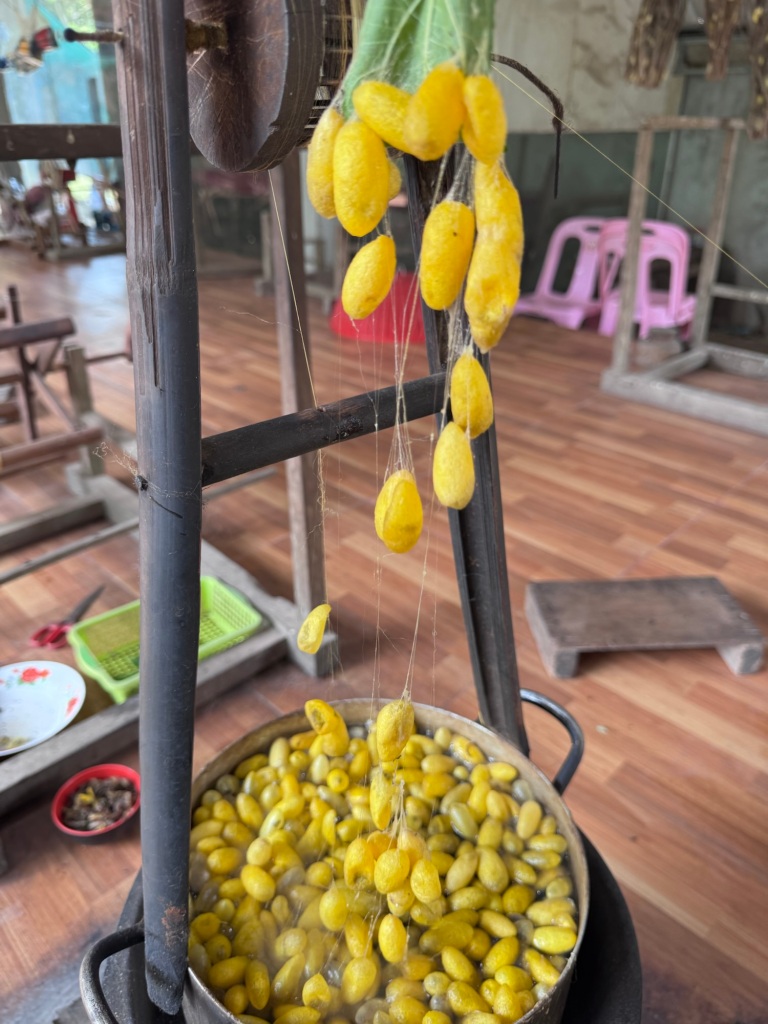
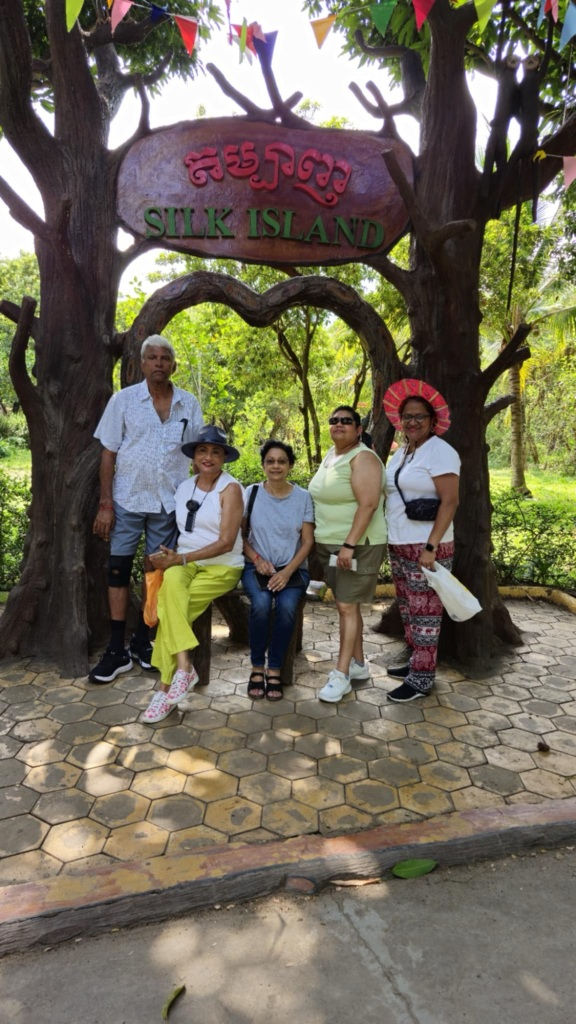
Silk Extraction Process Silk extraction is the process of obtaining silk fibers from silkworm cocoons. The process, known as sericulture, has been practiced for thousands of years, especially in China, India, Cambodia, and other parts of Asia. Step-by-Step Silk Extraction Process 1. Collecting Cocoons• Once silkworms have spun their silk cocoons (after 3–4 days of continuous spinning), the cocoons are harvested before the moths emerge.• If the moths break out, they cut the silk thread, making it unusable for long strands. 2. Stifling the Pupa• The cocoons are boiled or steamed to kill the silkworm pupa inside.• This also softens the sericin, a natural gum that holds the silk fibers together.• In Ahimsa (Peace) Silk, the moth is allowed to emerge naturally before collecting the empty cocoons. 3. Reeling the Silk• The softened cocoons are placed in warm water to help loosen the silk fibers.• A fine brush or stick is used to find the end of the silk thread, which is carefully unwound.• Several strands are twisted together to form a single, stronger silk thread.• A single cocoon can yield 300–900 meters (1,000–3,000 feet) of silk thread! 4. Twisting and Spinning• The raw silk is spun into threads or yarns, which can then be dyed and woven into fabric. 5. Weaving the Silk• The silk threads are woven into luxurious textiles, used for clothing, scarves, and accessories.• Traditional hand-weaving techniques are still used in places like Cambodia’s Silk Island (Koh Dach). Types of Silk Extraction Methods• Traditional Silk (Regular Process) – The pupa is killed to preserve the silk thread.• Ahimsa Silk (Peace Silk) – The moth is allowed to emerge naturally before harvesting the silk.• Wild Silk (Tussar, Eri, Muga) – Different silkworm species produce silk with unique textures and colors. Fun Facts About Silk Extraction• It takes about 2,500 cocoons to make one silk shirt!• China and India are the largest silk producers in the world.• Cambodian silk is known for its golden sheen and is often dyed using natural plant-based colors. Would you like more details on ethical silk alternatives or how to start silk farming?




Comments