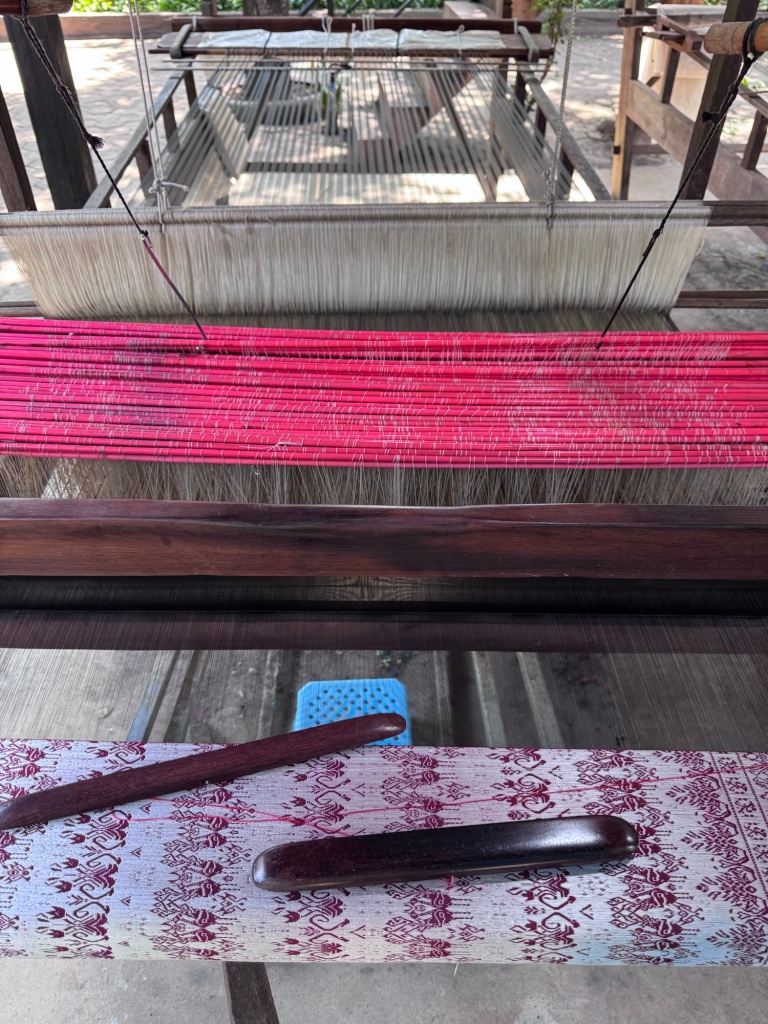
A silk weaver is a craftsman who weaves silk threads into fabric using a loom. Silk weaving is an ancient art, dating back thousands of years, and has been an important part of cultures in China, India, Persia, and Europe. Silk Weaving Process1. Preparing the Silk Threads – Raw silk threads are extracted from silkworm cocoons, cleaned, and spun into usable fibers.2. Dyeing – The threads are dyed using natural or synthetic dyes before weaving.3. Warping and Wefting – The threads are arranged on the loom. The warp (vertical threads) is set up, and the weft (horizontal threads) is woven through them.4. Weaving on a Loom – Using traditional handlooms or modern machines, the weaver interlaces the threads to create fabric.5. Finishing – The fabric is washed, treated, and sometimes embroidered or printed. Types of Silk Weaving• Brocade – Intricately woven with gold or silver threads (e.g., Banarasi silk from India).• Twill Weave – Produces a diagonal pattern (e.g., Silk twill used in scarves).• Plain Weave – Simple crisscross pattern (e.g., Habotai silk).• Satin Weave – Creates a smooth, glossy surface (e.g., Charmeuse silk). Silk weaving has been a prestigious profession, especially in regions like China (where the Silk Road originated), Lyon (France), and Varanasi (India). Today, silk weaving is still practiced by artisans worldwide, preserving centuries-old traditions while also embracing modern techniques. Are you interested in historical silk weaving, a specific region’s techniques, or learning how to weave silk yourself?




Comments