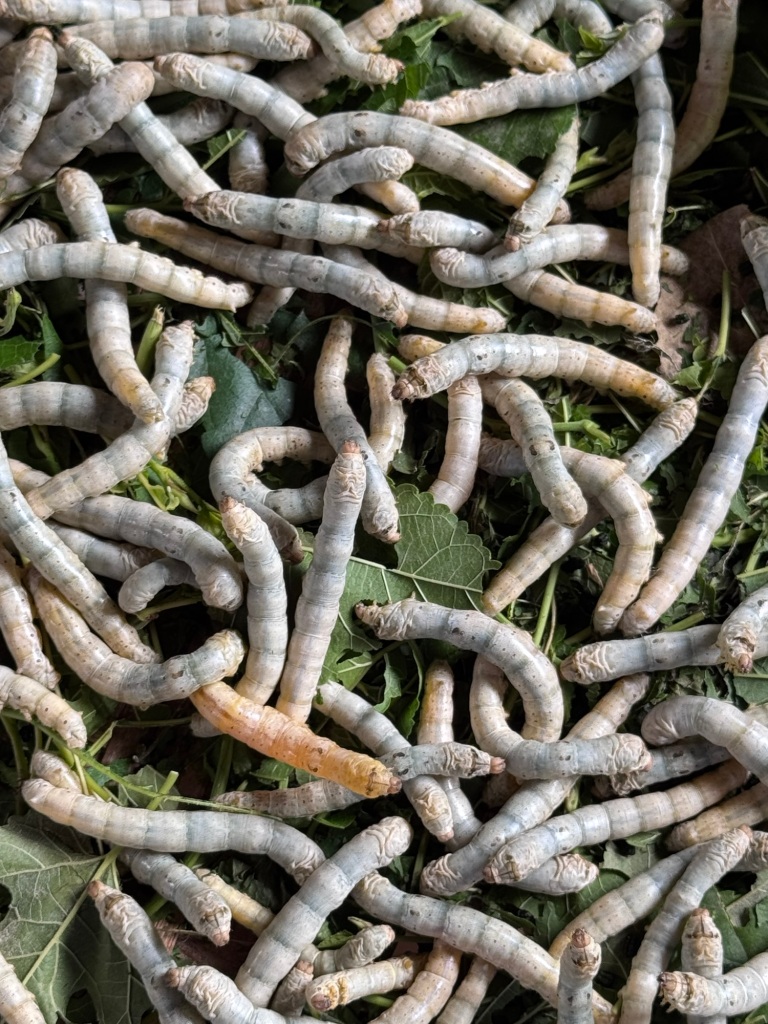
Silkworms (Bombyx mori) Silkworms are the larvae of the silk moth (Bombyx mori) and are responsible for producing silk, one of the most valuable natural fibers. They have been domesticated for over 5,000 years, primarily in China, India, Cambodia, and other parts of Asia. Life Cycle of a Silkworm1. Egg Stage – Tiny, oval eggs are laid by the female silk moth. After 10–14 days, they hatch into larvae (silkworms).2. Larva (Silkworm) Stage – The silkworm grows for about 4–6 weeks, shedding its skin multiple times (molting). It feeds exclusively on mulberry leaves.3. Pupa (Cocoon) Stage – The silkworm spins a silk cocoon around itself using a single continuous silk thread (300–900 meters long). This stage lasts about 2 weeks.4. Adult Moth Stage – Inside the cocoon, the silkworm transforms into a silk moth, which emerges to mate and lay eggs, starting the cycle again. Silk Production Process• To extract silk, the cocoons are boiled or steamed to soften the silk fibers.• The silk is carefully unwound and woven into luxurious fabrics used for clothing, scarves, and accessories. Fun Facts About Silkworms• Domesticated silkworms cannot survive in the wild and depend entirely on humans for food and care.• They produce silk using special glands in their mouth, secreting a liquid that hardens into fibers.• In some cultures, silkworm pupae are also eaten as a delicacy or used as animal feed. Would you like guidance on how to raise silkworms or produce silk at home?





Comments